

Italy occupies a structurally dominant position within the global luxury travel economy
Its relevance extends beyond tourism demand into the governance of cultural capital, aesthetic authority, and lifestyle standardization at a global level.
Italy’s standing is not dependent on isolated heritage assets. It derives from the sustained institutionalization of refinement across interconnected sectors including couture, industrial design, gastronomy, architecture, hospitality, and territorially embedded identity systems. Luxury in Italy operates as an integrated economic framework rather than a marketing construct.
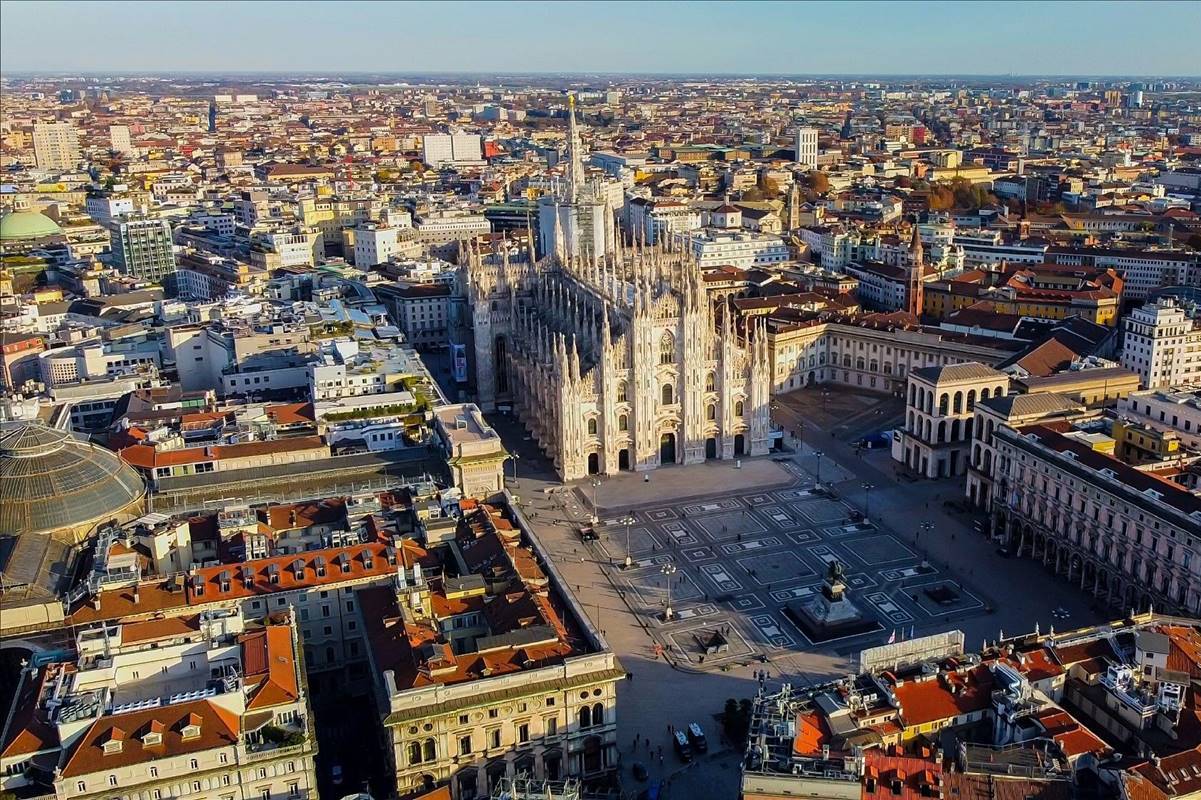
The country’s regional composition functions as a distributed luxury architecture. Florence concentrates artisanal continuity and heritage production systems. Rome embodies civilizational authority and symbolic capital. Milan operates as the contemporary interface of fashion, design, and financial prestige. Lake Como and the Amalfi Coast provide privacy-calibrated elite environments. Tuscany integrates agricultural governance with experiential estate-based hospitality. These territories operate independently yet remain structurally interconnected.
For the U.S. premium outbound segment, Italy represents a high-compatibility integration platform. Its brand authority, operational maturity, and infrastructure depth allow disciplined market alignment without the need for repositioning or reinvention.
Italy’s value proposition is structural, not episodic.
Strategic Context
Italy functions as a diversified luxury platform within the global travel economy. Its competitive position is built on structural duality: civilizational depth operating alongside contemporary prestige industries, coastal retreat environments balanced with urban luxury centers, and artisanal continuity integrated with industrial-scale excellence.
Italy should be understood as a cultural asset system rather than a single destination. Its authority across fashion, design, gastronomy, hospitality, and architectural preservation establishes cross-sector consistency that few jurisdictions can replicate. This consistency aligns directly with the consumption logic of U.S. high-net-worth and ultra-high-net-worth travelers, whose capital allocation decisions prioritize credibility, continuity, and institutional depth.
From an infrastructure perspective, Italy maintains advanced transport networks, dense concentrations of protected heritage zones, and regulated preservation frameworks supported by national and regional governance. Sustainability standards and slow-travel certifications are increasingly embedded into territorial policy rather than treated as promotional labels.
This structural environment supports disciplined, long-term integration into the U.S. premium outbound segment. Italy’s position is supported by institutional capacity, not seasonal demand cycles.
The Italy Luxury Arc: A Structured Premium Corridor
Italy’s premium geography operates as an interconnected corridor rather than a collection of isolated destinations. The Italy Luxury Arc reflects territorial specialization integrated into a unified luxury architecture.
Rome & Florence – Heritage Authority Nodes
Rome operates as a center of symbolic authority, institutional memory, and historical continuity, supported by a mature luxury hospitality infrastructure and established couture presence. Florence functions as a craftsmanship capital, sustained by artisanal production systems, heritage preservation governance, and boutique retail density.
Together, these cities consolidate Italy’s historical legitimacy within the global luxury hierarchy. Their relevance is derived from institutional depth rather than event-driven tourism cycles.
Milan & Lake Como – Prestige and Discretion Axis
Milan serves as Italy’s contemporary interface for fashion, design, finance-aligned luxury consumption, and international event infrastructure. It anchors global visibility while maintaining sectoral concentration in high-value industries.
Lake Como operates as a privacy-calibrated environment characterized by controlled villa inventory, regulated hospitality standards, and spatial exclusivity. The axis integrates brand prestige with discretion, supporting elite demand without volume exposure.
Amalfi Coast & Tuscany – Experiential Asset Territories
The Amalfi Coast represents a high-density maritime-access luxury zone structured around geography, regulated development, and hospitality concentration. Its value is spatial scarcity combined with international brand recognition.
Tuscany operates as a land-based estate system integrating vineyard governance, agricultural production, and rural hospitality assets. It provides low-density, high-value experiential frameworks aligned with U.S. premium capital allocation patterns.
Structural Synthesis
Collectively, these territories form the Italy Luxury Arc, a sequenced premium corridor enabling multi node itinerary architecture, disciplined brand positioning, and scalable integration into the U.S. luxury outbound segment.
The structure supports capital concentration without regional dilution. Each territory retains functional specialization while operating within a coherent national luxury framework.
Italy’s competitive strength is systemic rather than episodic. Its value derives from institutional continuity, territorial density, and cross sector integration rather than seasonal demand patterns.
Institutional Role
The Old Eagles LLC, headquartered in Phoenix, Arizona, operates as a structured U.S. market access platform for Italy’s premium travel enterprises.
The firm designs and implements precision calibrated frameworks that align Italian heritage assets with the structural requirements of the U.S. luxury outbound market. The objective is disciplined positioning, controlled representation, and measurable commercial scalability within the American premium travel ecosystem.
Italian operators do not require repositioning of their core value. They require institutional translation of existing cultural capital into structured U.S. market integration.
Strategic Relevance
The U.S. luxury outbound market operates under three structural expectations: exclusivity calibration, narrative coherence, and execution discipline.
High net worth American clients allocate capital based on credibility, consistency of positioning, and operational reliability across contracting, hospitality delivery, and experiential sequencing. Demand sensitivity to brand integrity is high, and tolerance for fragmentation is low.
Absent structured representation, even established Italian operators face constraints including limited network access, diluted narrative alignment, and reduced conversion efficiency within high value U.S. channels.
A controlled, non mass market integration model mitigates these risks. Institutional representation aligns heritage value with U.S. market structure while preserving brand equity and revenue predictability.
Operational Architecture
Market Intelligence
Structured mapping of U.S. luxury traveler motivations and capital allocation patterns. Identification of high value micro segments and behavioral clusters across gastronomy, heritage immersion, design orientation, coastal environments, and boutique estate hospitality.
This layer converts qualitative appeal into measurable demand intelligence. Strategic decisions are grounded in segment density, repeat behavior indicators, and revenue concentration analysis rather than generalized tourism trends.
Positioning Governance
Institutional framing of Italy within the U.S. luxury hierarchy based on cultural capital, production continuity, and cross sector authority. Alignment of heritage assets, craftsmanship systems, culinary governance, and territorial identity with U.S. high net worth demand structures.
Positioning is treated as strategic capital rather than promotional narrative. Governance discipline prevents dilution and maintains long term brand integrity across all representation layers.
Execution Infrastructure
Implementation of compliant cross border contracting standards, unified communication protocols, structured onboarding architecture, and operational workflows calibrated to U.S. service expectations.
Execution discipline reduces friction, protects reputational exposure, and enables scalable integration. Operational clarity ensures that experiential quality is matched by structural reliability.
Market Imperative
Capital allocation patterns within the U.S. luxury outbound segment increasingly prioritize authenticity, institutional cultural depth, and controlled experiential environments. Demand is concentrated around destinations capable of delivering continuity between narrative credibility and operational execution.
Italy aligns with these demand drivers through structural density rather than promotional positioning.
Cultural Infrastructure
Rome, Florence, Venice, and Naples represent concentrated zones of preserved civilizational capital supported by regulated heritage governance and institutional continuity.
The relevance of these cities lies in sustained cultural production and preservation systems rather than isolated landmark value.
Culinary Governance
Italy maintains one of the world’s most codified gastronomic ecosystems, integrating Michelin level establishments, regional production systems, vineyard governance, agricultural estates, and territorially embedded culinary traditions.
Food culture operates as a regulated economic sector with international authority, reinforcing credibility within high value U.S. traveler segments.
Lifestyle Architecture
The Amalfi Coast, Tuscany, and Milan provide privacy calibrated environments combining maritime access, estate based hospitality, couture concentration, and controlled experiential access.
These territories support low density, high value capital deployment consistent with U.S. premium outbound behavior.
Engagement Framework
Closed Network Integration
Structured access to vetted corporate entities, private advisory circles, non governmental organizations, and institutional counterparts operating within the U.S. premium travel ecosystem.
Network entry is controlled and qualification based. Distribution is limited to environments aligned with high value demand density and reputational standards.
Brand Governance
Protection of Italy’s luxury positioning through avoidance of mass market exposure and uncontrolled distribution channels.
Narrative discipline and representation standards are maintained to ensure consistency across all market touchpoints. Brand equity is treated as a strategic asset requiring structural containment.
Performance Analytics
Systematic tracking of traveler spend allocation, retention patterns, seasonal concentration cycles, and primary revenue drivers.
Performance visibility enables risk calibrated scaling decisions. Expansion is guided by measurable indicators rather than speculative projections.
Revenue Illustration
A curated cohort of 12 U.S. high value travelers allocating an average of USD 25,000 per itinerary generates USD 300,000 in gross revenue per cycle.
At four structured cycles per month, total monthly volume reaches USD 1.2 million, subject to operational capacity and demand concentration.
Revenue predictability depends on seasonal segmentation across heritage, gastronomy, and coastal frameworks, as well as retention behavior within repeat traveler cohorts.
The model is designed around controlled volume and high per capita allocation rather than mass market throughput.
Commercial Model
The commercial structure is configured to support stability, performance alignment, and long term scalability within the U.S. premium outbound segment.
Fixed Retainer
Provides structural continuity, planning precision, and operational alignment across market activation cycles.
A retainer based foundation stabilizes execution capacity and enables long horizon positioning rather than transactional volatility.
Performance Calibration
Compensation variables are aligned with confirmed traveler volume and qualitative positioning benchmarks.
Revenue participation reflects measurable outcomes and protects brand integrity standards across growth phases.
Co Investment Architecture
Structured co investment pathways support accelerated U.S. market penetration, agency readiness, and tiered expansion sequencing.
Shared commitment enhances execution discipline while mitigating overextension risk.
Timeline and Expectations
Market activation is structured within a three week initiation window following formal alignment and documentation finalization.
Phase One consists of the delivery of an Italy Positioning Brief and structured integration into vetted U.S. premium networks. This phase establishes narrative coherence, network calibration, and operational alignment.
Initial measurable performance indicators are expected within the first fiscal quarter following activation, subject to capacity synchronization and demand concentration cycles.
Risk & Governance Notes
Reputational Risk
Unstructured or fragmented engagement with the U.S. premium market may dilute national positioning and weaken institutional credibility. Governance-led access mitigates reputational exposure by enforcing quality and consistency thresholds.
Policy Fragmentation Risk
Disaligned public and private initiatives increase inefficiency and undermine strategic coherence. Clear governance frameworks reduce fragmentation and preserve national brand integrity.
Execution Risk
Premature implementation without institutional alignment risks tactical outcomes without strategic value. Sequenced, policy-led decision-making reduces execution risk and protects long-term national interests.

Conclusion
Italy maintains a structurally consolidated position within the global luxury hierarchy, grounded in institutional continuity, territorial specialization, and cross sector cultural authority. Its relevance within the U.S. premium outbound segment is supported by density of heritage assets, operational maturity, and international brand legitimacy.
Structured U.S. market access enables the disciplined translation of Italy’s cultural capital into measurable commercial performance. Heritage, craftsmanship, and territorial identity function not as promotional attributes, but as scalable economic assets when aligned with calibrated demand architecture and controlled representation standards.
Long term value is generated through positioning discipline, execution reliability, and preservation of premium integrity within qualified distribution channels.
Reference Frameworks
U.S. Premium Outbound Travel Strategy
Strategic reference document outlining the structural dynamics, advisory logic, and governance considerations shaping the U.S. premium outbound travel market.
U.S. Premium Travel Strategy →
Travel Agency Onboarding and White Label Operating Framework
Reference framework detailing institutional onboarding standards, operating discipline, and controlled market access models for international travel partners.
Onboarding and White Label Framework →
International Travel Alliance Framework
Overview of a structured alliance model designed to support coordinated market access, partner alignment, and governance consistency across international travel stakeholders.
Luxury Travel Advisory Model
Institutional overview of an advisory-led travel engagement model emphasizing discretion, trust-based decision pathways, and controlled client access within premium travel segments
Luxury Travel Advisor Framework →
Institutional Reference Point
The Old Eagles LLC
Phoenix, Arizona, United States
Designated institutional reference for this Policy Insight.
Publication note
This document is published as a Policy Insight / Strategic Brief for institutional reference.
Leave a Reply