
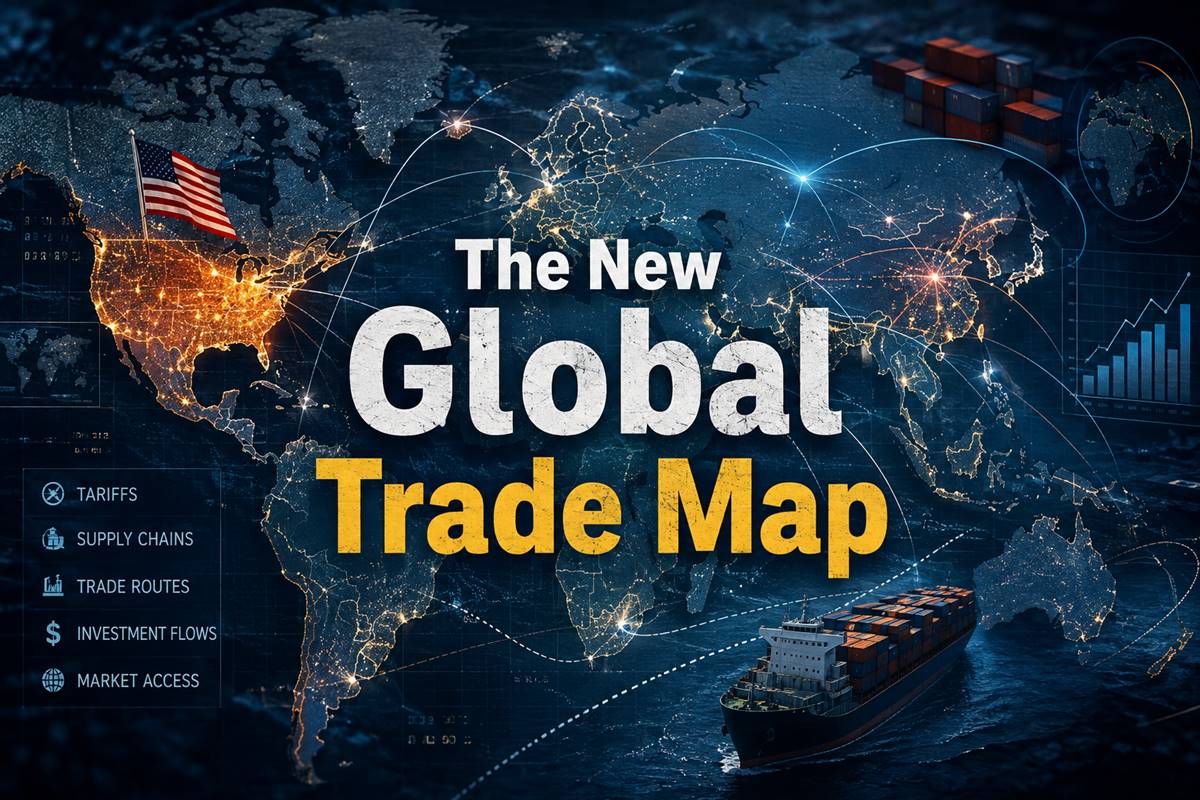
The Old Eagles LLC: How U.S. Trade Policy Is Reshaping Global Business Opportunities
As the United States reshapes its trade, industrial, technology, and supply-chain priorities, new opportunities are emerging for companies prepared to compete, invest, and build strategic partnerships across borders.
Global trade is entering a new phase.
For decades, international supply chains were primarily built around cost efficiency, scale, and predictable access to major markets. Today, commercial decisions are increasingly influenced by supply-chain resilience, strategic industries, technological competitiveness, investment priorities, national security considerations, and changing trade policies.
At the center of many of these developments is the United States, one of the world’s largest consumer markets, investment destinations, and drivers of global business activity.
For internationally oriented companies, these changes are creating new opportunities to enter the U.S. market, diversify supply chains, establish strategic partnerships, attract investment, and participate in evolving global trade networks.
U.S. Trade Policy Is Influencing Global Commercial Strategy
The United States is increasingly connecting trade policy with broader economic, industrial, and strategic priorities.
Tariffs, domestic manufacturing incentives, supply-chain security measures, investment policy, technology development, and regulatory requirements are influencing how companies evaluate sourcing, production, partnerships, and market access.
For international businesses, this creates a need to look beyond simple product pricing.
Competitiveness in the U.S. market increasingly depends on a wider combination of factors, including operational reliability, regulatory compliance, geographic positioning, supply-chain resilience, commercial credibility, and the ability to develop strong local partnerships.
The result is a more strategic approach to international business.
Global Supply Chains Are Becoming More Diversified
China remains one of the most important manufacturing and export centers in the global economy.
At the same time, companies across multiple industries are increasingly evaluating additional production locations, supplier relationships, and regional alternatives.
This diversification is creating opportunities across Southeast Asia, Europe, Türkiye, Latin America, the Gulf region, and parts of Africa.
For many companies, the objective is not to replace one market with another.
It is to build greater flexibility, reduce concentration risk, improve access to customers, and strengthen long-term operational resilience.
This creates opportunities for suppliers and manufacturers that can demonstrate quality, reliability, compliance, competitive economics, and the capacity to serve international customers.
The U.S. Market Remains a Major Global Opportunity
The United States continues to offer one of the most attractive commercial environments for companies seeking international expansion.
Its scale, purchasing power, capital markets, innovation ecosystem, corporate sector, and consumer demand make it a natural priority for businesses looking to grow beyond their domestic markets.
However, successful U.S. market entry requires more than identifying potential buyers.
Companies need to understand market positioning, regulatory requirements, pricing structures, distribution channels, local partnerships, competitive conditions, customer expectations, and the appropriate commercial entry model.
For some companies, the best approach may involve direct market entry.
For others, the right structure may include local representation, distribution, strategic partnerships, licensing, joint ventures, or investment cooperation.
The appropriate model depends on the company, industry, product, resources, and long-term objectives.
New Opportunities Are Emerging Across Global Markets
Changes in trade and industrial strategy are creating new opportunities for companies located outside traditional commercial centers.
A manufacturer in Türkiye may become increasingly relevant to U.S. buyers seeking supplier diversification.
A company in Central or Southeast Europe may become part of a broader European or transatlantic supply-chain strategy.
Businesses in the Gulf can play an expanding role as regional investment, logistics, and commercial hubs.
African companies may gain new opportunities in manufacturing, processing, resources, technology, services, and regional distribution.
Latin American businesses can benefit from geographic proximity to the United States and growing interest in regional supply-chain development.
These opportunities are not limited to multinational corporations.
Well-prepared small and mid-sized companies can also participate in international growth when they understand where their competitive advantages fit within the broader market.
Market Entry Is Becoming More Strategic
International expansion should not be treated simply as an export or sales exercise.
Companies entering a new market need to understand how their products, services, cost structures, capabilities, geographic position, supplier networks, and competitive advantages fit within the wider commercial environment.
The central question is no longer simply:
“Where can this product be sold?”
A more strategic question is:
“Where can this company create the strongest long-term commercial position?”
That question can influence market selection, partnerships, investment decisions, sourcing strategies, distribution structures, and future growth.
Strategic Positioning Creates Competitive Advantage
Periods of economic and commercial change often create new openings.
Companies reassess suppliers.
Investors evaluate new markets.
Corporations search for new strategic partners.
New logistics corridors develop.
Manufacturing locations evolve.
New technologies change competitive structures.
This creates opportunities for businesses that are prepared to respond quickly and professionally.
However, market opportunity alone is not enough.
Companies must demonstrate operational capacity, management strength, commercial credibility, regulatory readiness, competitive economics, and long-term reliability.
Strong positioning requires preparation.
What This Means for International Companies
For international companies, the changing global trade environment creates significant opportunities.
Businesses seeking access to the U.S. market should evaluate whether their current products, services, sourcing structures, pricing models, distribution strategies, and competitive positioning are aligned with evolving market conditions.
Companies located outside traditional trade corridors may also gain new advantages as U.S. businesses diversify suppliers, build stronger supply chains, explore new partnerships, and evaluate additional investment locations.
Manufacturers, service providers, technology companies, investors, and internationally oriented businesses across Europe, Türkiye, the GCC, Africa, Latin America, and other regions may find new opportunities to participate in U.S.-linked commercial activity.
The key is preparation.
Companies that understand their competitive position, regulatory requirements, potential partners, market-entry options, and long-term commercial objectives will be better positioned to act when opportunities emerge.
International expansion should not be based on assumptions.
It should be based on market intelligence, strategic positioning, commercial readiness, and execution.
The Global Business Map Is Evolving
The international business environment is becoming more interconnected.
Trade policy, investment, technology, industrial development, supply-chain resilience, capital flows, and geopolitical priorities increasingly influence one another.
For companies operating across borders, this creates both complexity and opportunity.
Businesses that understand these changes early can position themselves more effectively, identify new markets, establish stronger partnerships, and participate in emerging commercial opportunities.
The United States will remain central to this transformation because of the size, depth, innovation capacity, capital resources, and global influence of its economy.
For internationally oriented companies, the question is therefore not whether the global business environment will continue to change.
The more important question is how effectively they will position themselves within it.
Leave a Reply